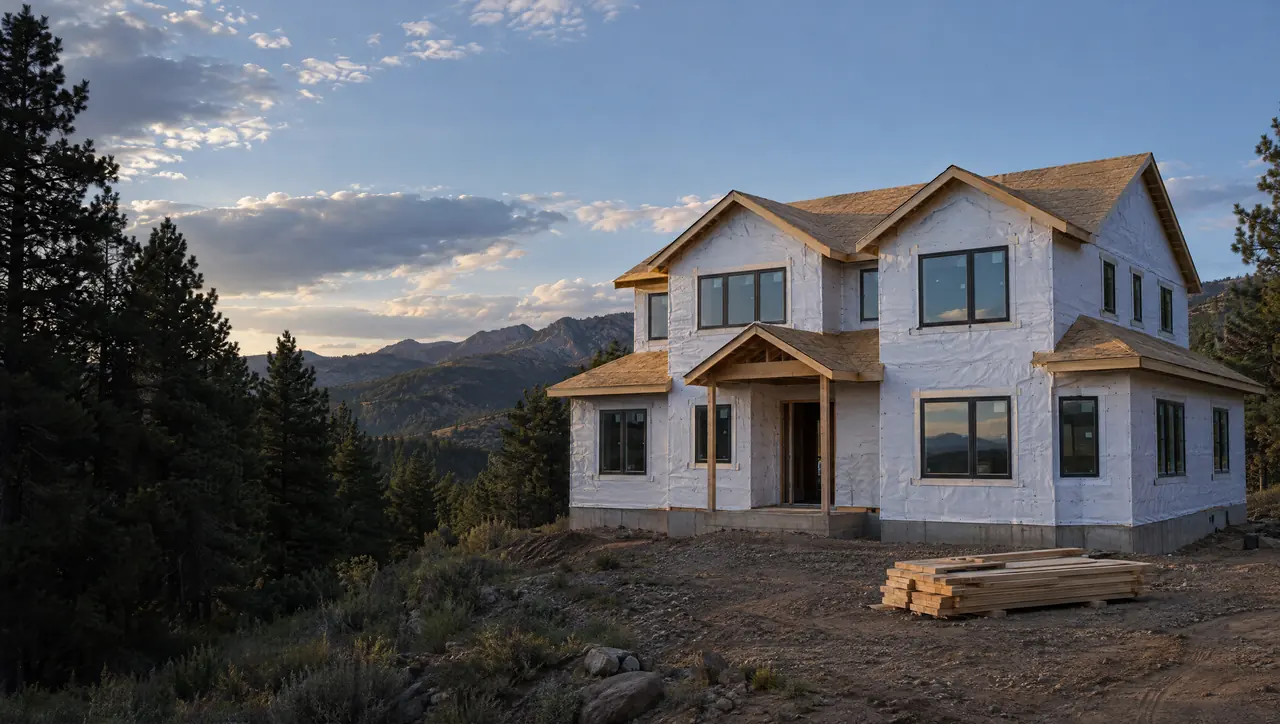
How construction loans work for a custom home.
A plain-language guide to financing a house that doesn't exist yet, from appraisal on plans to the final draw.
Financing a custom build
Paying for a house that isn't built yet.
A regular mortgage lends against a finished house. A custom home needs money released in stages as it's built, so it's usually financed with a construction loan. Knowing how those loans work helps you plan the budget, the schedule and the paperwork. This is general information, not financial advice, so talk with a lender about your situation.
Typical steps
From approval to move-in.
Approval and budget
The lender reviews your finances along with the plans, specifications, builder contract and a detailed cost breakdown. A complete, realistic budget makes this step go faster.
Appraisal on plans
Because the house doesn't exist, the appraiser values it as it will be when finished, based on the plans and specifications. That value helps set how much the lender will lend.
Closing
The loan closes before construction starts. If you already own the land, its equity may count toward your down payment.
Draws during construction
Money is released in stages, called draws, as work is completed and inspected. During construction, payments are usually interest only, on the amount drawn so far.
Conversion or payoff
When the house is finished, the loan either converts to a permanent mortgage or is paid off by a new one, depending on the loan type.
Two common structures
One-time close or two-time close.
| One-time close | Two-time close | |
|---|---|---|
| How it works | A single loan covers construction, then converts to a permanent mortgage | A construction loan, then a separate mortgage that pays it off |
| Closings | One | Two, each with its own costs |
| Permanent rate | Often set at the start | Set when the house is finished |
| Flexibility | Less room to shop for the final mortgage | Free to choose a different mortgage lender at the end |
What a lender usually asks for
Expect the lender to review the project as closely as your finances. Common requests include:
- Construction plans and specifications.
- A signed construction contract and a detailed cost breakdown.
- The builder's license and proof of insurance.
- A draw schedule tied to stages of completion.
- A survey and, for rural lots, well and septic documentation.
Budget surprises during construction usually come out of your pocket, not the loan, so a realistic cost picture and a contingency matter here too.
Budgeting for the loan itself
Financing has its own costs, separate from the house. Interest accrues on each draw during construction, so the monthly payment grows as the build progresses. There are closing costs, and with a two-time close there are two sets. Some lenders charge inspection fees for each draw. A longer build also means more months of construction interest, which is one more reason steady decisions and a realistic schedule pay off.
Questions
Construction loans: questions.
Can land I already own count toward my down payment?
Often, yes. Many lenders count the equity in land you own toward the required down payment on a construction loan. How much counts, and how it's valued, depends on the lender and the loan program.
Who inspects the work before each draw?
The lender usually sends its own inspector, or uses a third-party inspection company, to confirm that the work claimed has been completed before releasing each draw. That's separate from building department inspections.
What happens if the build costs more than the loan?
The difference generally comes from the borrower. That's why budgets carry a contingency, and why selections and changes are worth settling before construction starts. Lenders review the budget at approval partly to reduce that risk.
Planning the numbers
Start with a budget a lender can review.
A clear scope, drawings and a detailed cost breakdown make approval smoother. We can talk through what goes into that package.